Decoding reward pathways that link quick payouts to elevated status in app-based sports and casino hybrids
Harper Simon · Aug 20, 2026

Decoding reward pathways that link quick payouts to elevated status in app-based sports and casino hybrids
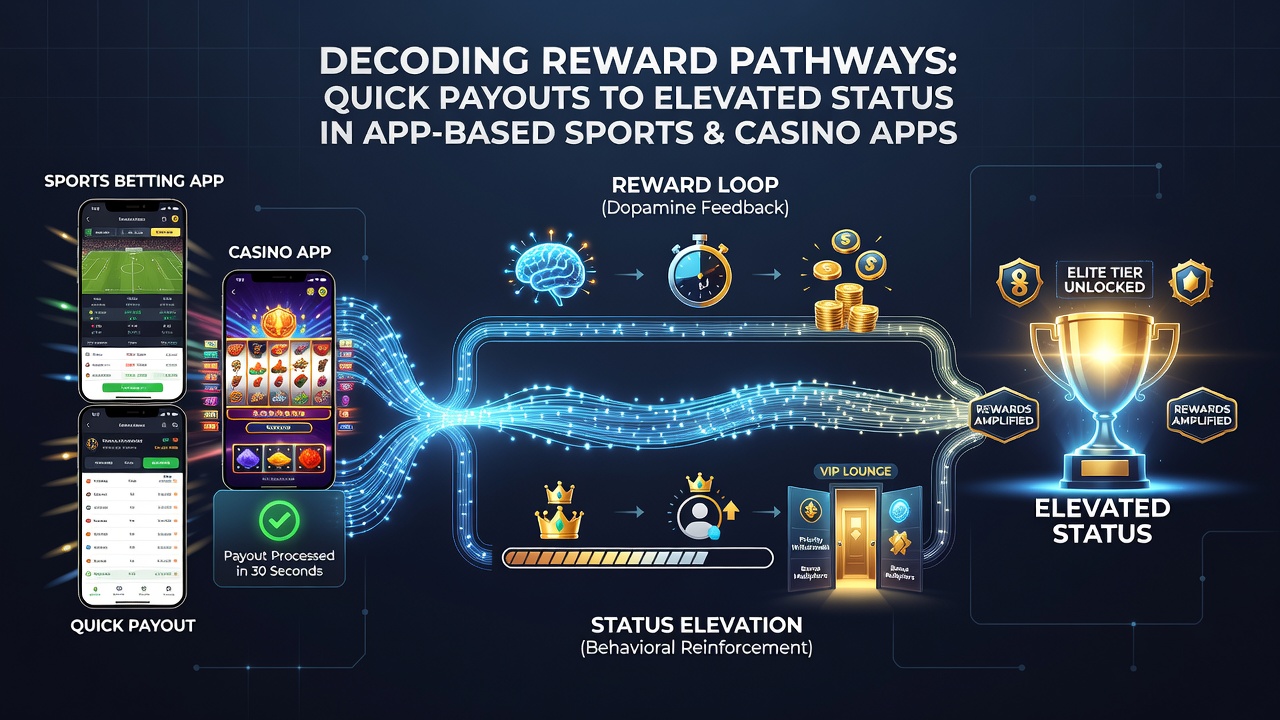
App-based platforms that merge sports betting with casino offerings have created layered reward systems where rapid fund transfers directly influence user progression toward higher status tiers, and data from multiple markets shows these mechanisms operating through integrated loyalty mechanics that track transaction speed alongside activity volume. Observers note that when payouts process within minutes rather than days, algorithms often flag the accounts for tier advancement because the systems prioritize velocity of capital movement as a proxy for engagement depth.
How hybrid apps structure their core reward loops
These applications combine live odds on sporting events with reel-based games and table simulations, then route all financial activity through a single ledger that records deposit frequency, withdrawal timing, and net position changes. Research indicates that users who receive cleared funds within a set window receive automated status points that accumulate toward bronze, silver, or gold designations, and those designations unlock separate bonus pools unavailable at lower levels. The pathways operate on conditional triggers where a withdrawal completed in under ten minutes can generate multiplier credits that elevate the account without requiring additional wagers.
Payment speed as a status signal
Payment processors integrated into these hybrids apply tiered verification protocols that accelerate once an account demonstrates consistent high-volume activity, and the resulting speed itself becomes visible to other users through profile badges or leaderboards. Figures released in August 2026 from North American operator consortia reveal that accounts with sub-fifteen-minute payout histories advanced to premium tiers at rates three times higher than those experiencing standard processing delays. This correlation appears because the backend systems treat rapid settlement as evidence of financial reliability rather than isolated transaction events.
Operators further embed status elevation within progressive loyalty matrices that award incremental privileges such as personalized account managers, reduced fees on future transfers, and exclusive access to hybrid events blending sports data feeds with live dealer sessions. Those who maintain quick payout patterns across consecutive months accumulate points that compound, allowing lateral movement into invitation-only segments where bonus structures scale with maintained velocity metrics.
Cross-regional patterns in reward calibration
Platforms operating across multiple jurisdictions calibrate their reward thresholds differently yet maintain the same core linkage between payout rapidity and tier access. In jurisdictions outside the UK, operators have aligned withdrawal acceleration with regional banking rails to sustain the same status progression curves, and industry reports from the Victorian Responsible Gambling Foundation document similar tier advancement rates tied to transaction timing. The architecture ensures that elevated status remains contingent on continued velocity rather than static balance levels alone.
Academic analyses from Canadian research groups have mapped these loops by examining anonymized transaction logs, revealing that accounts reaching mid-tier status within six months typically exhibit payout completion times averaging under eight minutes. The studies further show that once status rises, operators introduce new payout corridors that preserve the speed advantage, thereby reinforcing the pathway through successive privilege layers.
Operational mechanics behind the linkage
Backend rules engines evaluate a combination of metrics including average withdrawal latency, deposit-to-withdrawal ratio, and cross-product activity spanning sports and casino modules. When latency falls below defined thresholds, the system automatically queues the account for review and potential promotion, and promotion notices arrive via in-app messaging that highlights the new benefits unlocked by the accelerated fund flow. This process repeats at each tier boundary, creating a continuous feedback loop where status gains depend on sustained payout performance.
Support infrastructure scales in parallel, with higher-tier users gaining priority routing that further shortens resolution times on any payout queries, and this additional layer of responsiveness itself feeds back into the reward calculation. Data aggregators tracking global hybrid app performance note that the average time to next tier shortens measurably once initial quick-payout milestones are met, illustrating the self-reinforcing nature of the designed pathways.
Conclusion
The documented reward architectures in app-based sports and casino hybrids demonstrate a consistent pattern where payout velocity functions as both input and output of status elevation, with algorithms converting rapid settlement records into tier progression at predictable rates across markets. Continued operation of these systems depends on the integration of real-time payment rails with loyalty engines that treat transaction speed as a primary status determinant, and external analyses continue to track how these linkages evolve alongside regulatory and technological shifts in digital gambling environments.